Our Structure


Steering Committee
The Trans-Atlantic Pancreatic Cancer Alliance (TAPCA) is governed by a transatlantic Steering Committee consisting of four of its esteemed members, plus its founder. They are (alphabetical): Prof. Jordan Berlin (Vanderbilt University Medical Center, USA) Prof. Niels Halama (DKFZ, Heidelberg University, Germany), Dr. Christine Iacobuzio-Donahue (Memorial Sloan Kettering Cancer Center, USA), Prof. Daniel Palmer (University of Liverpool Experimental Cancer Medicine Center, UK), Dott. Paolo Rossi Barnard (TAPCA Coordinator & Founder, Italy).

Jordan Berlin
Jordan Berlin
Niels Halama
Niels Halama
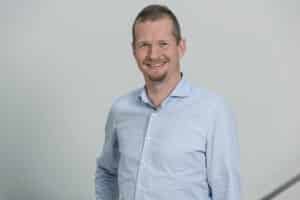
In addition to running his laboratory, Prof. Niels Halama is Certified clinical investigator in oncology, clinical trials and medical products. 2003 till 2006 he was editor and author of the Section "Endocrinology” and “Neurology", for Medicle (www.medicle.org). He is member of the Deutsche Gesellschaft für Immunologie (DGfI), American Association for Cancer Research (AACR), USA (AACR-sponsored membership), the Cancer Immunology Working Group (CIMM) and the International Cancer Microenvironment Society (ICMS). Prof. Halama is also highly involved in graduate and undergraduate training at the University of Mainz.
His research field is Tumor Immunology, Tumor immunotherapy, Tumor Inflammation, (Immunological) Biomarker Identification, Imaging Technologies, High-Throughput Processing, Colorectal Cancer, Pancreatic cancer, Breast Cancer, Malignant Melanom
Christine Iacobuzio-Donahue
Christine Iacobuzio-Donahue

Daniel Palmer
Daniel Palmer
Director, Cancer Research UK Liverpool Experimental Cancer Medicine Centre
Professor and Honorary Consultant in Medical Oncology, University of Liverpool
Professor Palmer took his current position of Chair in Medical Oncology at the University of Liverpool in 2011.
His research interests relate to HPB cancers (liver, pancreas and biliary tract) and incorporate basic laboratory science, translational research and clinical trials. His laboratory research is currently investigating novel therapeutic approaches to the treatment of HPB cancer through stimulation of anti-tumour immune responses and targeting tumour micro-environment, and developing and validating biomarkers for a stratified approach to the treatment of pancreatic cancers. With colleagues in Liverpool he also has an interest in early detection of pancreatic cancer and is a core member of the ESPAC group. He is a member of the UK hepatobiliary and pancreatic Clinical Studies Groups and has been Chief Investigator for a number of national and international clinical trials in liver and pancreatic cancer. He is Director of the Cancer Research UK/NIHR Liverpool Experimental Cancer Medicine Centre and has established a portfolio of early phase clinical trials and translational studies associated with a large clinical practice for patients with pancreatic cancer.
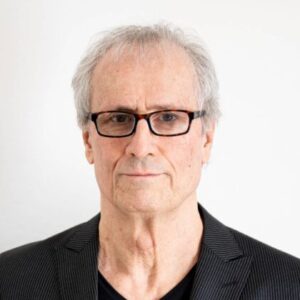
Paolo Rossi Barnard
Paolo Rossi Barnard
Working Groups
Working Group on Financial Liaisons
It will leverage TAPCA‘s vastly augmented potential for breakthrough science with Public Funders, Healthcare Investors & the Industry as the Go-to place for PDAC investment. Appraises and approaches potential investors and handles enquiries from interested actors/stakeholders. This WG will also explore other sources of public/private funding (Supranational Bodies, Institutional Investors, Donors, US/European foundations and more). In due course, it will consider candidates for a CFO position, ideally drawn form the Venture Philanthropy sector. This WG is flanked by TAPCA’s Treasurer.
Working Group on Outreach & Regulatory Liaisons
Headed by a CDO, it is tasked with lobbying Regulators, Institutional Actors and Policymakers by recommending amendments to present problematic regulatory standards and by proposing actionable policy recommendations that address critical issues in pancreatic cancers. Coordinates dialogues with external labs, hospitals, Academia. It works in partnership with the Working Group on Patients Representation, Advocacies & Global Partnerships on the crucial assembling of the World’s Largest Patients Registry in PDAC. In this regard it functions as afferent of this project’s needs to General Practitioners, hospitals, Advocacies and to the public in order to register and catalogue Patients’ data.
Working Group on Innovation & Cutting-edge Research
Headed by a CSO this is by far the largest WG since, in the fullness of time, it will comprise a growing number of specific research Sub-Working Groups. It coordinates two areas:
a) Data/technology analysis and sharing .
b) The running of clinical trials.
As for a), it coordinates AI and software applications for multiomics/data/samples analysis and storage being aided by the Sub-Working Group on IT & Platforms. It supervises translation from the bench to the bedside and explores disruptive early diagnostics techniques. It also scrutinizes research in cutting-edge surgery in cooperation with TAPCA’s Sub-Working Group of Surgeons. As for b), it informs clinical trials, possibly run in multiple labs simultaneously, and eliminates research dead-ends via consensus. Supervises a Sub-Working Group on Multidisciplinary Science in PDAC that harmonizes and makes effectual the cooperation among all relevant disciplines that are crucial in supporting a holistic approach to the treatment of PDAC.
Working Group on Epidemiology and Meta-analysis of Treatment Options
It is tasked with the monitoring of PDAC incidence globally, across ethnicities, age groups, in relation to nutrition, environmental factors and preexisting conditions. It is bolstered by the use of AI and Statistical Science professionals. Double checks on known risk factors for PDAC and searches for still unknown or underestimated ones. Systematically reviews current approved PDAC treatment options via meta-analysis of PFS, OS, QoL and formulates recommendations to the relevant bodies and to the Industry. Produces comprehensive infographics for TAPCA internal use and simplified ones for public awareness.
Working Group on Legal Affairs, Data Protection & Diversity
It makes use of legal consultants in Public Health to sift through the maze of privacy laws and regulations pertaining to: large scale Patients’ data gathering and sharing, patenting rules, technology transfer practices in Academia and labs, transfer of intellectual property, inter-organizational deals & partnerships, acquisition of rights, commercialization of research, facilitating international R&D, ceding licenses to Industrial actors (eg: UIC R&D). It supervises legal compliance of all funding inflows and expenditures in partnership with TAPCA’s Treasurer.
Working Group on Patients Representation, Advocacies & Global Partnerships
This group will be afferent to General Practitioners, hospitals, Advocacies, the public and to the media for the latest treatment and research news, for preventive recommendations and will flag up promising cutting-edge discoveries. Keeps science editors of the most reputable specialized and generalist media up to speed with the above. It is efferent from General Practitioners, hospitals, Advocacies and from the public in the recruitment of Patients for experimental clinical trials or for compassionate use (expanded access). It works in close partnership with the Working Group on Outreach & Regulatory Liaisons for the creation of the World’s Largest Patients Registry in PDAC. Liaises with Global Health Bodies and national or international Cancer Consortia.